
It Is Finished

The following is an adapted excerpt from Seven Utterances of Christ on the Cross.
For by one offering He has perfected for all time those who are sanctified.
Hebrews 10:14
I glorified You on the earth, having accomplished the work which You have given Me to do.
John 17:4
Concerning this work, and the finishing thereof by Jesus Christ upon the cross, we shall enquire what this work was and how it was finished.
What was the work which Christ finished by his death?
It was the fulfilling the whole law of God in our place, and for our redemption, as a sponsor or surety for us. The law is a glorious thing; the holiness of God, that fiery attribute, is engraved or stamped upon every part of it; "From his right hand went a fiery law" (Deut. 33:2). The jealousy of the Lord watched over every point and tittle of it, for his dreadful and glorious name was upon it; it cursed everyone that continued not in all things contained therein (Gal. 3:10). Two things, therefore, were necessarily required in him that should perfectly fulfill it, and both found in our Surety, and in him only, namely, a subjective and effective perfection.
A Subjective Perfection
There must be a subjective perfection. He that lacked this could never say, “It is finished.” Perfect working always follows a perfect Being. That he might therefore finish this great work of obedience, and therein the glorious design of our redemption; lo! in what shining and perfect holiness was he produced! "That holy thing that shall be born of you, shall be called the Son of God" (Luke 1:35). And indeed, "such an High-priest became us, who is holy, harmless, undefiled, separate from sinners" (Heb. 7:26). So that the law could have no exception against his person; nay, it was never so honored since its first declaration, as it was by having such a perfect and excellent person as Christ to stand at its bar, and give it due reparation.
An Effective Perfection
There must also be an effective perfection, or a perfection of working and obeying, before it could be said, “It is finished.” This Christ had; for he continued in all things written in the law, to do them: He fulfilled all righteousness, as it behaved him to do (Matt. 3:15). He did all that was required to be done, and suffered all that was requisite to be suffered; he did and suffered all that was commanded or threatened, in such perfection of obedience, both active and passive, that the pure eye of divine justice could not find a flaw in it; and so finished the work his Father gave him to do; and this work finished by our Lord Jesus Christ was a necessary, difficult, and precious work.
A necessary work
Necessary for the Father
It was necessary on the Father's account: I do not mean that God was under any necessity, from his nature, of redeeming us this or any other way; for our redemption is an act of the free counsel of God; but when God had once decreed and determined to redeem and save poor sinners by Jesus Christ, then it became necessary that the counsel of God should be fulfilled. "To do whatever your hand and counsel had before determined to be done" (Acts 4:28).
Necessary for Christ
It was necessary with respect to Christ, upon the account of that precious compact that was between the Father and him about it. Therefore it is said by Christ himself, "Truly the Son of man goes as it was determined" (Luke 22:22), that is, as it was before agreed and covenanted; under the necessity of fulfilling his engagement to the Father, he came into the world; and being come, he still minds his engagement, "I must work the works of him that sent me" (John 9:3).
Necessary for Us
Yes, and it was no less necessary upon our account that this work should be finished; for, had not Christ finished this work, sin had quickly finished all our lives, comforts, and hopes. Without the finishing of this work, not a son or daughter of Adam could ever have seen the face of God. Therefore it is said, "As Moses lifted up the serpent in the wilderness, so must the Son of man be lifted up; that whoever believes in him should not perish, but have everlasting life" (John 3:14–15).
On all these accounts, the finishing of this work was necessary.
A difficult work
The finishing of this work was exceedingly difficult: It cost many a cry, many a groan, and many a tear, before Christ could say, “It is finished.” All the angels in heaven were not able, by their united strength, to lift that burden one inch from the ground, which Christ bore upon his shoulders, yes, and bear it away. But how heavy a burden this was may in part appear by his agony in the garden, and the bitter outcries he made upon the cross, which in their proper places have been opened.
a precious work
It was a most precious work which Christ finished by his death; that work was dispatched and finished in few hours, which will be the matter of everlasting songs and triumphs to the angels and saints to all eternity. O it was a precious work! The mercies that now flow out of this fountain, namely, justification, sanctification, adoption, etc. can’t be valued; besides the endless happiness and glory of the world to come, which cannot enter into the heart of man to conceive. If the angels sang when the foundation stone was laid, what shouts, what triumphs shall there be among the saints when this voice is heard: “It is finished!”
Meet the author:
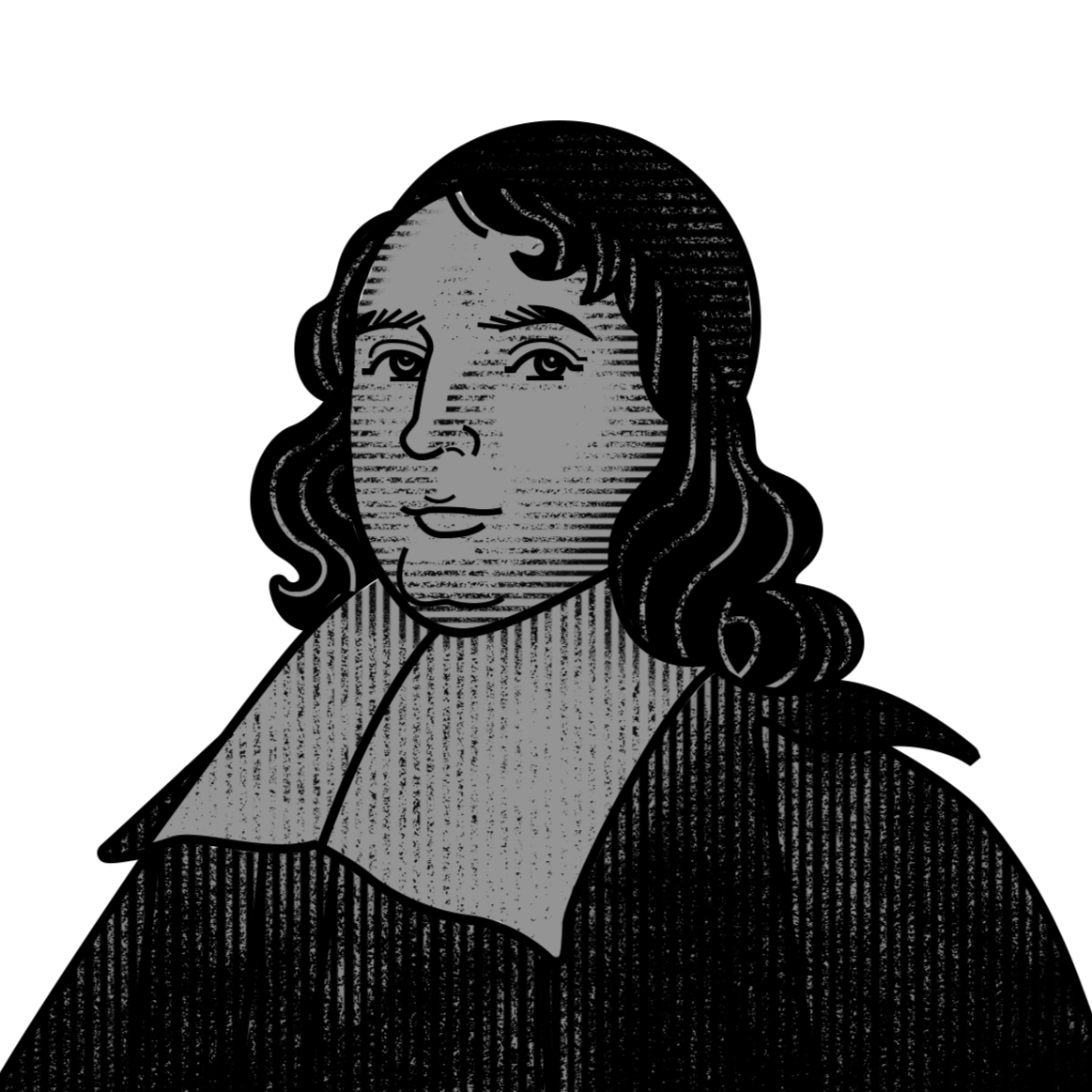
John Flavel
1627–1691
John Flavel was an English Puritan pastor, theologian, and author who faithfully preached and lived out the gospel. He was a vigorous and voluminous writer. Flavel wrote, “Either Christ will be to us all in all, or nothing at all.” Christ was truly ‘all’ to Flavel.