The Christian’s Family Badge

The following is an adapted excerpt from The Night of Weeping.
It is for discipline that you endure; God deals with you as with sons; for what son is there whom his father does not discipline? But if you are without discipline, of which all have become partakers, then you are illegitimate children and not sons.
Hebrews 12:7–8
It is very remarkable that the Apostle fixes upon affliction as the mark of true Sonship. Truly, he makes it the family badge. Nay, he makes it the test of our legitimacy. Strong language this! Had any but an inspired apostle used it, there would have been outcry against it as absurd and extravagant. Let us, however, take it as it is, for we know that it speaks the mind of God. Discipline is, then, really one of the chief marks of our lawful and honorable birth. Were this characteristic not to be found on us, we should be lacking in one of the proofs of our adoption. Our legitimacy might be called in question. It might be said that God was not recognizing us as his true-born sons and daughters, and that either he had never received us as such, or had rejected us. There must be the family badge to establish our claim of birth, and to be a pledge of paternal recognition on the part of God our Father.
It is a solemn thought. Flesh and blood shrink from discipline. We look around to see if there be no way of escaping, and ask if it must be so? Yes, it must be, as we shall shortly see, and the attempt to shun it is vain. Yet it is also a blessed thought. It cheers us under trial to remember that this is the Father's seal set upon his true-born sons and daughters. Oh how it lightens the load to think that it is really the pledge of our divine adoption!
We need not then count upon bright days below, nor think to pass lightly over the pleasant earth, as if our life were but the "shadow of a dream." Joy within we may expect—"joy unspeakable and full of glory," for that is the family portion. But joy from without, the joy of earth's sunshine, the joy of the world's ease and abundance, the joy of unsevered bonds and unweeping eyes, is not our lot in this vale of tears.
Still, in the midst of the ever-wakeful storms through which we are passing to the Kingdom, there is peace—deep peace, too deep for any storm of earth to reach. In the world we have tribulation, but in Jesus we have peace. "Peace I leave with you, my peace I give unto you, not as the world giveth give I unto you." And it is this which gives the peculiar aspect to the saints, the aspect of mingled joy and grief. The eye is dim with tears, yet, behold, it glistens with joy! There is the brow of shaded thought, yet peace is playing round it. Clouds overshadow them, but on every cloud we see calm sunshine resting.
Their "peace is like a river." It is not stagnant as the lake nor tumultuous as the sea, but ever in calm motion, ever flowing on in its deep channel, like a river. The course may sometimes be through rocks, sometimes through level plains, sometimes through tangled brakes, sometimes along the cornfield or "the hill of vines," yet still it moves unhindered on. It may be night or day, it may be winter or summer, it may be storm or calm, but it is there, flowing on till the embrace of ocean receives it. Such is our peace! Let us hold it fast.
Nor need we hide our peace any more than we should hide our cross. Let the world see both, and learn how well they agree together. For it is the cross that makes this peace feel so sweet and suitable. Amid the tears of grief, peace keeps her silent place, like the rainbow upon the spray of the cataract; nor can it be driven thence so long as Jehovah's sunshine rests upon the soul. "The work of righteousness shall be peace, and the effect of righteousness: quietness and assurance for ever."
It is for discipline that you endure; God deals with you as with sons;
for what son is there whom his father does not discipline? But if you
are without discipline, of which all have become partakers, then you
are illegitimate children and not sons. … He disciplines us for our
good, so that we may share His holiness. All discipline for the moment
seems not to be joyful, but sorrowful; yet to those who have been
trained by it, afterwards it yields the peaceful fruit of righteousness.
Hebrews 12:7–11
Meet the author:
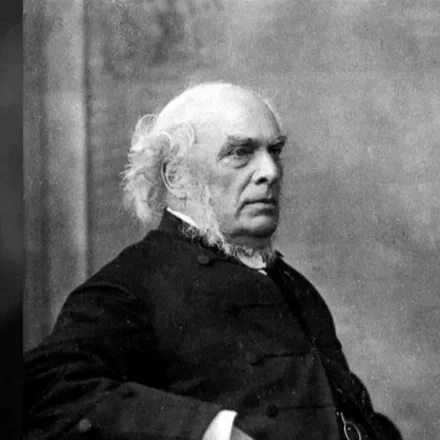
Horatius Bonar
Horatius Bonar (1808-1898) was a Scottish minister, author, and hymnwriter, penning nearly 150 hymns in his lifetime. Today, Bonar is still widely renowned for his work as a hymnwriter, as churches across the world continue to sing the hymns he wrote, including “I Heard the Voice of Jesus Say ‘Come unto Me and Rest.’”